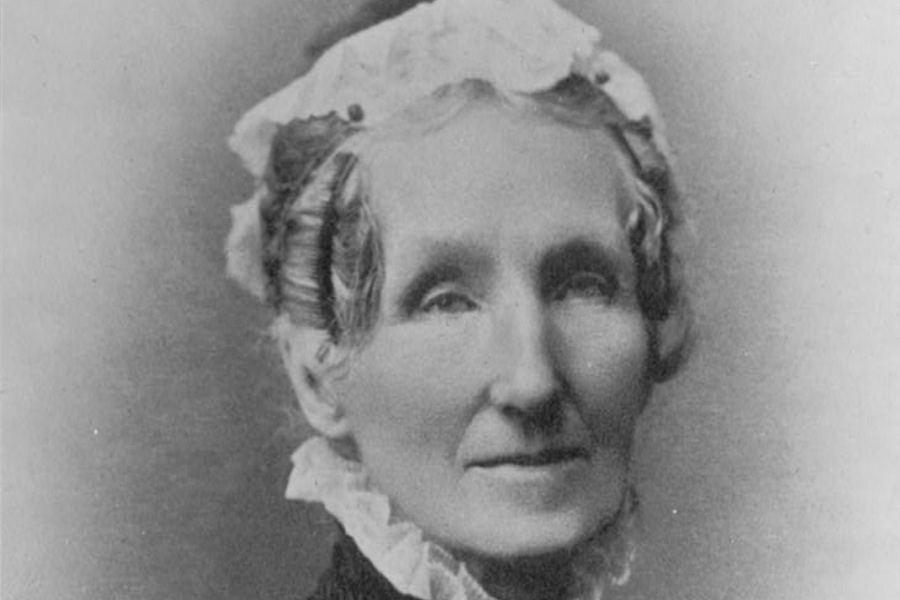
A mother at the center of a remarkable family
I think of Eliza Grace Symonds as the still point in a family that changed the modern world. Her name may appear most often beside Alexander Melville Bell, Alexander Graham Bell, and the wider Bell family, yet she was not merely a footnote in their story. She was a wife, a mother, an artist, and a woman whose life carried its own weight. Born in 1809 and living until 1897, she moved through a century of transformation with the calm gravity of an old house that has seen many winters and kept its shape.
Eliza was born in Hampshire, England, and later became part of a family line that would stretch across continents and generations. She married Alexander Melville Bell in 1844 in Edinburgh, and that marriage placed her at the heart of a household that would eventually produce one of the most famous inventors in history. Her sons were Melville James Bell, Alexander Graham Bell, and Edward Charles Bell. Two of those sons died young, and that loss became part of the family’s long emotional weather. Alexander Graham Bell survived and rose into global fame, but the family tree remained rooted in Eliza’s life and presence.
Early life and personal character
I don’t consider Eliza a celebrity nowadays. She did not establish herself through public statements, office-holding, or a crowded newspaper career. She appears to have lived in a gentler mode, influencing household life, letters, music, painting, and her children’s inner world. Her description as a miniature painter and pianist creates a clear impression of a patient and precise woman. Small brushstrokes and focus are required for miniature painting. A steady hand and an eye that can see detail like sunshine in water are needed.
Her hearing loss connected her personal life to her son Alexander Graham Bell’s later career, making it a significant part of her biography. Her deafness was not private in family memory. Bell was up in a human context that shaped his emotional and intellectual paths to voice, communication, and sound. Her life extended outside the home. It silently shaped history.
Marriage to Alexander Melville Bell
Alexander Melville Bell was a teacher of elocution and a developer of Visible Speech, and their marriage joined two people who lived close to language, expression, and performance. I imagine their home as a place where words were handled with care, where voice mattered, and where conversation was never just background noise. That kind of environment can be like a workshop for the mind. Ideas are tested on the anvil of daily life.
Their marriage produced three sons and also carried the burdens of illness, migration, and loss. The family moved through Edinburgh, later into wider British and North American settings, and eventually into the transatlantic world that surrounded Bell family work and legacy. Eliza’s role in this movement should not be underestimated. Women of her era often lived inside the history other people later wrote, but their labor, memory, and steadiness made the larger story possible.
Children and the Bell family line
Eliza’s children were deeply important to her identity, and each one belongs in the family story.
Melville James Bell was the first son. He died young, and his short life is often remembered as part of the family sorrow that shadowed the Bells.
Alexander Graham Bell, born in 1847, became the most famous of the children. He transformed communication with the telephone and later worked across fields that included education, acoustics, and invention. I see him as the branch that reached farthest into the sky, but the trunk came from Eliza and Alexander Melville Bell together.
Edward Charles Bell, the youngest son, also died young. His early death adds another layer of grief to Eliza’s life, reminding me that family history is never only about triumph. It is also made of absences.
From Alexander Graham Bell and Mabel Hubbard Bell came the next generation. Their children included Elsie May Bell, Marian Hubbard Bell, Edward Bell, and Robert Bell. The family line continued through descendants such as Mabel H. Grosvenor and Elsie Alexandra Carolyn Myers, along with other grandchildren and great-grandchildren tied to the Bell and Fairchild branches. In this family, names repeat like echoes in a long hall, each generation carrying a fragment of memory into the next.
A broader family portrait
If I map Eliza’s family, I see more than a list of relations. I see a living structure, almost like roots in a riverbank. Her parents were Samuel Symonds and Mary White. She also had siblings recorded in family lines, including James White Symonds, Samuel Symonds, Edward Stace Symonds, and Charles Hunt Symonds. These names matter because they show that Eliza came from a wider kinship circle before she entered the Bell family.
Her husband Alexander Melville Bell was not simply a spouse in the background of her story. He was a partner in a highly intellectual household, and together they created the conditions in which their children could grow. Their grandson and great-grandchildren later extended that family name across new places and new careers. Family, in this case, was not a static list. It was a relay race with memory handed from one runner to the next.
Career, interests, and achievements
Eliza did not leave a public career, which may explain why she is neglected. No grand ledger of her offices or companies exists. Her accomplishments were not lacking. Her miniaturist and pianist work reveals a refined living. It appears she valued art, expertise, and refinement. Even without medals, those are accomplishments.
Her greatest accomplishment may have been shaping a life. Alexander Graham Bell wasn’t born overnight. Speech, hearing, and expression were important in his family. Eliza’s presence, hearing disability, artistic temperament, and maternal role shaped his later work. A legacy of weather, voice, and memory, not stone.
Later years and family memory
Eliza died in 1897 in Washington, D.C., and was buried beside Alexander Melville Bell. By then, her son Alexander Graham Bell was already a world figure. That contrast feels almost dramatic. A mother who lived much of her life in relative privacy was resting at the edge of a family story that had already become global.
Still, I do not think Eliza should be remembered only because of her son. She deserves attention for what she represented in her own century. She was a woman of England and Scotland, a wife in a household of ideas, a mother of sons who would become important to science and history, and a person who carried art inside ordinary life. Her story is quieter than her son’s, but quiet does not mean small. Sometimes it means the foundation is hidden beneath the cathedral.
FAQ
Who was Eliza Grace Symonds?
Eliza Grace Symonds was the wife of Alexander Melville Bell and the mother of Alexander Graham Bell. She was born in 1809 and died in 1897. She is also described as a pianist and a painter of miniatures.
Who were her children?
Her sons were Melville James Bell, Alexander Graham Bell, and Edward Charles Bell. Alexander Graham Bell became the best known of the three.
Who was her husband?
Her husband was Alexander Melville Bell, an elocution teacher and the developer of Visible Speech.
Did Eliza Grace Symonds have grandchildren?
Yes. Through Alexander Graham Bell and Mabel Hubbard Bell, she had grandchildren including Elsie May Bell, Marian Hubbard Bell, Edward Bell, and Robert Bell.
What is Eliza Grace Symonds remembered for?
She is remembered as a key member of the Bell family, especially as the mother of Alexander Graham Bell. She is also remembered for her artistic interests and for the role her life played in the family environment that shaped later achievements.