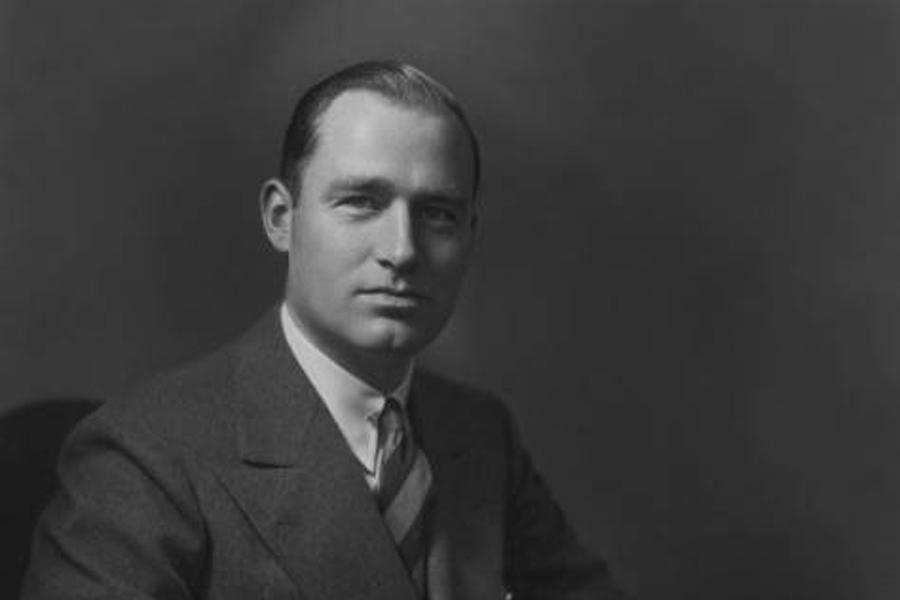
A Heir Born Into a Famous American Dynasty
I see William Henry Vanderbilt Iii as a man shaped by wealth, grief, duty, and a long family shadow. He was born in New York City on November 24, 1901, into one of the most famous American dynasties of the early 20th century. His name alone carried the weight of railroads, mansions, shipping fortunes, and old social ritual. But his life was not just a carved marble portrait. It moved. It bent. It changed with each decade.
He was the only child of Alfred Gwynne Vanderbilt and Ellen “Elsie” French Vanderbilt. That fact mattered. Being the sole child of a powerful line can feel like standing alone in a long hall full of portraits. Every glance in his direction came with expectation. Every inheritance came with history attached.
His father, Alfred Gwynne Vanderbilt, was a member of the great Vanderbilt railroad family. He died aboard the Lusitania in 1915, when William was still young. That loss marked the family forever. It also turned William into the central male heir of his branch, with responsibility arriving early and abruptly.
His mother, Ellen “Elsie” French, later known as Elsie Vanderbilt Fitzsimons, was also important to his story. She maintained a place in Newport society and lived for years at Harbor View, the family estate that became closely tied to William’s upbringing and later financial life. Through her, he remained connected to the world of summer houses, formal gardens, and inherited rank.
The Family Web Around Him
William Henry Vanderbilt Iii lived inside a family tree that spread wide and tall. It was not a simple household. It was a branching system of money, marriages, and famous names.
His paternal grandfather was Cornelius Vanderbilt II, one of the central figures in the dynasty’s later fortune. His paternal grandmother was Alice Claypoole Gwynne Vanderbilt, whose name also carried great social force. His paternal aunt was Gertrude Vanderbilt Whitney, the sculptor, patron, and founder of the Whitney Museum of American Art. She brought art into a family known more for steel rails and business power. She was the family spark that lit a different room.
He also had two paternal half-brothers from his father’s second marriage. Alfred Gwynne Vanderbilt Jr. and George Washington Vanderbilt III were younger than William and part of the same Vanderbilt current, though from another branch of the same trunk. Their lives show how layered the Vanderbilt family was, with half-siblings and second marriages adding new leaves to the old tree.
I would describe the family like a grand house with many doors. Some opened onto business. Some onto politics. Some onto art. Some onto tragedy.
William’s marriages also shaped his family story.
His first wife was Emily O’Neill Davies. They married in 1923. Their marriage produced one daughter, Emily “Paddy” Vanderbilt Wade, born in 1925. That daughter became one of the main links carrying the family line into later generations. The marriage ended in divorce in 1928, but the child remained a living bridge between two families.
His second wife was Anne Gordon Colby. They married in 1929 and had three children together: Anne Vanderbilt Hartwell, Elsie Vanderbilt Aidinoff, and William H. Vanderbilt IV. This second marriage lasted far longer and gave William a larger domestic circle. It also anchored his private life through the middle years of adulthood.
His third wife was Helen Hope Cummings Cook, whom he married later in life, after his divorce from Anne Colby. No children were reported from that marriage. By then, William had already built and dismantled several chapters of family life.
Career, Service, and Public Office
He was more than a society heir. He entered public service and business, which matters. He worked despite inheriting wealth.
He joined the Naval Coast Defense Reserve at 15 for World War I. That’s impressive. Most youngsters are still learning crowd-standing. He wore a uniform. He returned to military service during World War II in more formal roles. His assignments included the Panama Canal Zone, OSS special operations, and Admiral Chester Nimitz’s Pacific staff. His military career structured a privileged individual.
In 1925, he started Automotive Transportation Company. The Short Line, a bus service between Newport, Providence, and New England and New York, was his creation. It was not a decorative hobby. It was a transportation project. He knew mobility, routes, and current life, I thought. Railroads characterized his family. Buses and highways defined his time.
His political career existed too. He was RI State Senator from 1929 until 1935. After that, he was Rhode Island governor from 1939 until 1941. He served as governor during a time when government efficiency and accountability were crucial. He cut over 400 state jobs and supported civil service reform. A small but significant accomplishment. He left a mark despite being a short-term governor.
Money, Property, and the Shape of Inheritance
The financial story of William Henry Vanderbilt Iii is as important as his political one. He was not merely rich. He was part of a web of trusts, estates, and inherited property that moved through generations like water through old pipes.
As a young man, he benefited from a sizable trust left by his father. Later, he inherited from his grandmother Alice Vanderbilt as well. These inheritances included cash, land, and emblematic family property. One of the best known was Oakland Farm, which became one of his key Newport assets.
Harbor View, the Newport estate long associated with his mother, also formed part of his family world. These were not just houses. They were symbols, memory vaults, and social stages. They held dinners, summer routines, and entire centuries of status in their walls.
Over time, William sold much of the family property. That included Oakland Farm and later Harbor View. By the time of his death in 1981, his probate estate was much smaller than the inherited wealth that had surrounded him in youth. That pattern is common in old fortunes: the mountain is inherited, then slowly weathered by time.
I find that part of his story especially revealing. Money can arrive in a flood and leave in a stream.
A Life in Decades
The arc of his life can be read almost like a family ledger.
1901: birth in New York City
1915: death of his father aboard the Lusitania
1917 to 1919: early naval service
1923: marriage to Emily O’Neill Davies
1925: birth of his daughter Emily “Paddy” Vanderbilt
1925: founding of his transportation company
1928: divorce and election to the Rhode Island State Senate
1929: marriage to Anne Gordon Colby
1929 to 1935: state senate service
1939 to 1941: governor of Rhode Island
1941 to 1945: World War II service
1969: divorce from Anne Colby
1970: marriage to Helen Hope Cummings Cook
1981: death in Williamstown, Massachusetts
The dates matter because they show movement. His life was not static. It was a sequence of roles, losses, marriages, and reinventions.
Legacy in the Vanderbilt Line
William Henry Vanderbilt III linked old wealth to new public life, making him prominent. Son of Alfred Gwynne Vanderbilt, grandson of Cornelius Vanderbilt II, nephew of Gertrude Vanderbilt Whitney, father of many children, and husband of three women over his life. His descendants went in separate routes.
His daughter Emily “Paddy” Vanderbilt Wade lived into the 21st century, preserving the family legacy. His daughters Anne Vanderbilt Hartwell and Elsie Vanderbilt Aidinoff joined that branch structure. William H. Vanderbilt IV continued the name directly, echoing his predecessors.
The Vanderbilt family in this period felt like a river with multiple channels. A channel went through art. Through rail and transit. One by politics. Through social history. W. Henry Vanderbilt Iii centered several.
FAQ
Who was William Henry Vanderbilt Iii?
William Henry Vanderbilt Iii was an American businessman, military officer, and politician. He was born in 1901, served in both world wars in different capacities, founded a transportation company, and later served as governor of Rhode Island from 1939 to 1941.
Who were his parents?
His father was Alfred Gwynne Vanderbilt. His mother was Ellen “Elsie” French Vanderbilt, later known as Elsie Vanderbilt Fitzsimons.
Did William Henry Vanderbilt Iii have children?
Yes. He had one daughter with his first wife, Emily “Paddy” Vanderbilt Wade. With his second wife, Anne Gordon Colby, he had three children: Anne Vanderbilt Hartwell, Elsie Vanderbilt Aidinoff, and William H. Vanderbilt IV.
Was he related to Gertrude Vanderbilt Whitney?
Yes. Gertrude Vanderbilt Whitney was his paternal aunt.
What was his most important public role?
His most visible public role was governor of Rhode Island. He also served in the state senate and worked in military service and transportation business.
What happened to his family wealth?
He inherited substantial property and trust assets, including land and family estates, but much of the real estate was sold over time. By the end of his life, his probate estate was far smaller than the inherited fortune that had surrounded his earlier years.