A daughter shaped by history and purpose
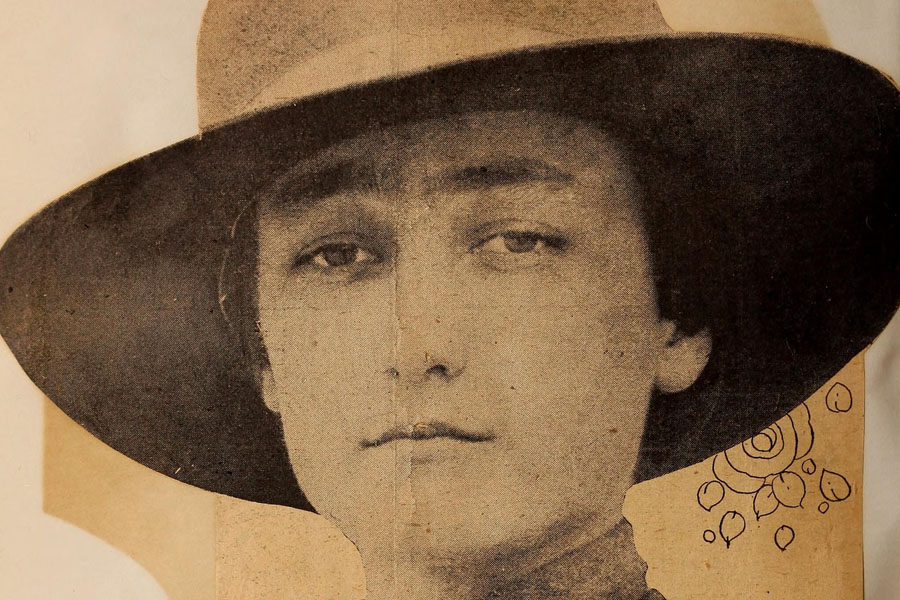
I think of Elizabeth Harrison Walker as someone born into a family tree that looked less like a tree and more like an oak forest, crowded with presidents, first families, and public memory. She was born on February 21, 1897, in Indianapolis, Indiana, the only child of Benjamin Harrison and Mary Dimmick Harrison. Her life opened in the shadow of the White House, but it did not stay there. She moved with a quiet, determined current of her own.
Her father, Benjamin Harrison, had already served as President of the United States when Elizabeth was born. Her mother, Mary Dimmick Harrison, came into the family later, after Benjamin’s first marriage. That detail matters because Elizabeth was part of a blended presidential household, and her place in it was singular. She was not one child among many in the second marriage. She was the child, the late-life daughter, the last living link to a complicated chapter in the Harrison story.
I find that her early life carries a sharp contrast. She came from national prominence, yet her future would be built not on ceremonial display but on study, law, finance, and public education. She was born with history around her like velvet curtains, but she stepped into adulthood with practical shoes.
The Harrison family circle
The family’s most famous member is Elizabeth’s father, Benjamin Harrison. He was the 23rd US president and son of John Scott Harrison and Elizabeth Ramsey Irwin. Elizabeth is directly related to one of America’s most renowned presidential lines through John Scott Harrison, the son of William Henry Harrison and Anna Harrison. That makes William Henry Harrison and Anna Harrison her great-grandparents.
Her paternal grandmother’s line continues through Elizabeth Ramsey Irwin’s parents, John Witherspoon Scott and Mary Potts Neal. Elizabeth was significantly involved in American political and frontier history, therefore these names matter. Her family was not formed on one shining star. A constellation.
He has Russell Benjamin Harrison and Mary Harrison McKee from his first marriage. Elizabeth was born into a home world with her half siblings. Mary Harrison McKee remained close to the Harrison family, and Russell Benjamin Harrison became famous. The limbs of this family never stop extending.
Mother Mary Dimmick Harrison deserves more than a footnote. She was more than Harrison’s second wife. She was Elizabeth’s mother, the center of a private and public life. Because Elizabeth was her only child with Benjamin, the mother-daughter tie is strong in the family narrative.
Marriage, children, and the next generation
Elizabeth married James Blaine Walker Jr. on April 6, 1921. His name itself carries a thread of political inheritance, since he was tied to the Blaine family. But in Elizabeth’s life, he was more than a name connected to another old American line. He became her husband, the man beside whom she built a family of her own.
Together they had two children: Benjamin Harrison Walker and Jane Walker Garfield, also known as Jane Harrison Garfield in some family references. I like the shape of those names because they show how memory moved through the family like water through stone. The names Benjamin Harrison and Garfield were not chosen casually. They carried legacy, honor, and the weight of public life. Names in this family were never just labels. They were bridges.
Benjamin Harrison Walker later married Elizabeth Sillcocks Walker and had two sons. Jane Walker Garfield married Newell Garfield and had a daughter, Eliza, and later a granddaughter, Sirjana. That means Elizabeth Harrison Walker became the root of another branching family line, one that moved from presidential history into ordinary life, marriage, and descent. The grandeur did not vanish, but it softened into the shape of descendants, homes, and memories.
Education, law, and public work
Elizabeth Harrison Walker did not drift through inherited privilege. She studied. She worked. She earned a law degree from New York University School of Law in 1919, and she was admitted to both the Indiana and New York bars at the age of 22. That detail says a great deal about her: she was young, disciplined, and serious.
Her professional life moved into the area of women and finance, which feels especially modern for her era. She served as secretary for the Commission of Economic Development, and she was reportedly the only woman on that body. She also founded, published, and edited a newsletter called Cues On the News, aimed at women investors and distributed through banks. That is a striking image to me. I picture her not as a figure locked in inherited marble, but as someone with ink on her hands, teaching women how to read the language of money.
She also spoke on radio and television about economic questions affecting women. That made her a translator of sorts, taking complicated financial ideas and turning them into something more usable, more human. Her work had the feel of a lantern in a corridor. Not glamorous, perhaps, but necessary.
A life that moved through public memory
Elizabeth also influenced World War I women’s military readiness. She attended a 1916 Emergency Services Corps camp in New Jersey, where women learned hiking, signaling, riding, shooting, and first aid. That episode shows her other side. Her credentials went beyond student and professional. She engaged in physical discipline and civic readiness when women’s roles were expanding.
In New York City, she died on December 25, 1955. Her age was 58. Benjamin Harrison’s direct line lost their final kid. That lends her life a final brilliance, like a room’s last candle after a big gathering.
The wider family web
If I pull the family circle wider, I see several more names that belong in Elizabeth’s story. Her paternal grandfather was John Scott Harrison, and her paternal grandmother was Elizabeth Ramsey Irwin. Her great-grandparents included William Henry Harrison and Anna Harrison on one side, and John Witherspoon Scott and Mary Potts Neal on the other.
Her husband James Blaine Walker Jr. connects her to another political family line through the Blaine name. Her children, Benjamin Harrison Walker and Jane Walker Garfield, extended the family into new generations, with marriages that added Elizabeth Sillcocks Walker and Newell Garfield to the story. Even the family names feel layered, like paint built up over decades.
I also notice how the family carries repetition as a kind of inheritance. Benjamin appears again and again. Harrison appears again and again. Walker appears again and again. These names are a refrain. They remind me that families with public legacies often preserve themselves through naming as much as through tradition.
FAQ
Who was Elizabeth Harrison Walker?
Elizabeth Harrison Walker was the daughter of President Benjamin Harrison and Mary Dimmick Harrison. She became a lawyer, financial writer, and public speaker, and she is remembered for her work helping women understand economic issues.
Who were her closest family members?
Her closest family members included her parents, Benjamin Harrison and Mary Dimmick Harrison; her half siblings, Russell Benjamin Harrison and Mary Harrison McKee; her husband, James Blaine Walker Jr.; and her children, Benjamin Harrison Walker and Jane Walker Garfield.
What made her professional life important?
She graduated from New York University School of Law in 1919, was admitted to the Indiana and New York bars, and spent much of her career focused on women, money, and public education. She founded and edited Cues On the News, which helped make finance more accessible to women.
How is she connected to President William Henry Harrison?
William Henry Harrison was her great-grandfather through her father’s line. That makes Elizabeth part of the Harrison presidential family across several generations.
Why is Elizabeth Harrison Walker still worth remembering?
I remember her because she lived at the point where inheritance met independence. She was born into one of America’s most historically loaded families, yet she built a life defined by study, legal training, financial education, and public service.