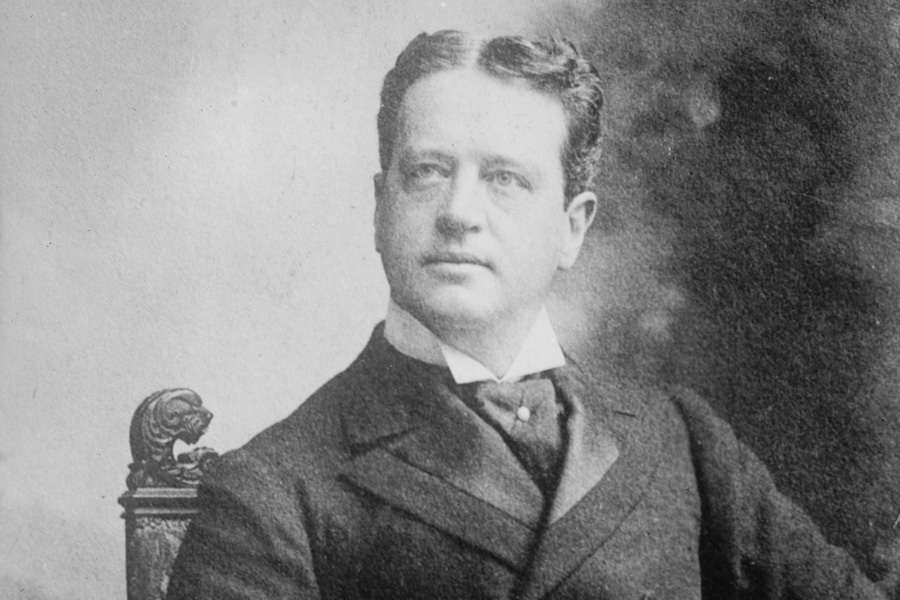
The boy born into two fortunes
I see William Kissam Vanderbilt III as a figure cut from polished marble and sunlight, a young man born into a world already built before he arrived. He was born on October 26, 1907, in Manhattan, New York, the only son of William Kissam Vanderbilt II and Virginia Graham Fair Vanderbilt. That alone placed him in a rarefied orbit. On one side stood the Vanderbilt rail and society fortune. On the other stood the Fair mining wealth. He was the meeting point of two giant family streams, and both ran deep.
His life began in an era when names still carried the weight of empires. The Vanderbilt name opened doors, but it also created a kind of weather around him. He was never an ordinary son. He grew up in a family where estates, yachts, automobiles, and imported adventures were part of the atmosphere. Wealth did not sit quietly in that household. It moved, shone, and announced itself.
William III was not a man who left behind a long business record or a public career full of offices held and companies led. Instead, his life is remembered through family, privilege, travel, and tragedy. He was one of those heirs whose personal story matters because of the family constellation around him and because his life ended so early.
His parents, William II and Virginia Fair Vanderbilt
His father, William Kissam Vanderbilt II, was a force in his own right. He was an heir, a motor enthusiast, a yachtsman, and a man who loved speed and spectacle. He helped create the Long Island Motor Parkway, a road that reflected both ambition and modernity. He also built Eagle’s Nest on Long Island, one of the family’s great estates. That world shaped William III from the beginning. I picture a son growing up in the shadow of engines, manicured lawns, and rooms filled with inherited confidence.
His mother, Virginia Graham Fair Vanderbilt, was the daughter of James Graham Fair and Theresa Rooney Fair. She brought the Fair fortune into the Vanderbilt story. The marriage joined two powerful names, and William III stood at the center of that union as their only son. His mother’s branch gave him another layer of status, another set of ancestors whose names were already written into American money history.
The family was not simply rich. It was layered, like a house with many wings. Each side of the family had its own legacy, and William III inherited both the shine and the expectation.
His sisters and the shape of the household
Muriel Fair Vanderbilt Adams and Consuelo Earl were William III’s sisters. His closest full siblings and part of his childhood household.
The older sister, Muriel Fair Vanderbilt Adams, married into her own family and social group. She was from the same privilege and heritage, yet her life went differently. Consuelo Vanderbilt Earl was the most famous sibling. She married multiple times and was prominent in society and family history for decades. The Vanderbilt children remind me of a trio in different stances under the same family photo light. Two daughters and one son with names others would repeat after they died.
The family continued. William II remarried after Virginia, and Rosamund Lancaster Warburton Vanderbilt became William III’s stepmother. Rosemary and Barclay Harding Warburton III were his stepchildren. This blended the home into multiple branches, like a tree grafted with fresh growth. The trunk was thick and noble, but the branches were distinct.
Grandparents on both sides of the map
William III’s paternal grandparents were William Kissam Vanderbilt I and Alva Erskine Smith Vanderbilt. William I helped define the scale of Vanderbilt wealth through railroads and enormous holdings. Alva was one of the great social strategists of her time, a woman whose influence reached far beyond simple inheritance. Through them, William III inherited a legacy built not just on money but on social architecture, the shaping of taste and status.
On his mother’s side were James Graham Fair and Theresa Rooney Fair. James Fair was a silver mining magnate and U.S. senator from Nevada, a man whose fortune came from the rugged engine rooms of mining rather than railroads. Theresa Rooney Fair anchored that side of the family. Through the Fair line, William III was connected to another American money dynasty, one rooted in the West as much as in the East.
I find this split especially striking. The Vanderbilt line was polished and urban, full of railroads and social control. The Fair line had the rough metallic pulse of mining wealth. William III inherited both glamour and grit, both inherited polish and the memory of extraction.
A life of travel, hunting, and fast machines
William III did not seem to pursue a long conventional career. His life was more private, more aristocratic, more shaped by movement than by office. He traveled widely. He hunted. He was associated with automobiles in the same way his father was. That detail matters because speed was almost a family language.
In 1931, he went on safari in the Anglo Egyptian Sudan. That kind of journey was not casual tourism. It was part expedition, part performance, part adventure staged at the edge of empire. Trophies from those trips later became part of the family memorial world. I see him as the kind of young man who was drawn to motion, to far places, to the thrill of the road and the open country. His life, though brief, had the glint of a postcard at sunset.
Financially, he stood on a massive inherited base. In 1920, his grandfather’s estate included a trust of 1,000,000 dollars for him. That number is not just a sum. It is a statement of scale. It tells me that even as a child he was already wrapped in a net of established wealth. His life did not begin at the bottom and climb. It began on the upper floors.
The final road north
His death was sudden and violent. A car accident near Ridgeland, South Carolina, killed William III on November 15, 1933. His Bentley was heading north from Florida to New York. He was 26 and young.
The family story is silenced by it. Age did not halt, predict, or soften his death. The line abruptly broke. His father eventually built a memorial wing at Eagle’s Nest to show how much the death affected the family. Grief was memorialized in stone and architecture by the family.
One of William III’s most significant touches. He lived too short to become a public institution, but his family kept him alive. The memorial wing retained him in the house, estate, and family story.
Why his name still matters
William Kissam Vanderbilt III matters because he sits at the intersection of several large American narratives. He was a Vanderbilt heir, a Fair descendant, a son, a brother, a stepbrother, a grandson, and an early casualty of fast modern life. He represents the private cost inside public grandeur. His story is small in length but large in texture.
I also think his life helps explain how these dynasties worked. Wealth did not simply sit in accounts. It became houses, ships, photos, safaris, trusts, marriages, and memorials. It created a world where even a short life could leave behind a visible trail. William III’s trail is not a business empire. It is a family map, a set of relationships, and a memory preserved in the architecture of one extraordinary estate.
FAQ
Who was William Kissam Vanderbilt III?
William Kissam Vanderbilt III was an American heir born on October 26, 1907, and killed in an automobile accident on November 15, 1933. He was the only son of William Kissam Vanderbilt II and Virginia Graham Fair Vanderbilt.
Who were his immediate family members?
His immediate family included his father, William Kissam Vanderbilt II, his mother, Virginia Graham Fair Vanderbilt, and his sisters, Muriel Fair Vanderbilt Adams and Consuelo Vanderbilt Earl. He also had a stepmother, Rosamund Lancaster Warburton Vanderbilt, and step siblings, Rosemary Warburton and Barclay Harding Warburton III.
Did William Kissam Vanderbilt III have a public career?
He does not appear to have had a major public or corporate career. He is remembered more as a wealthy heir, traveler, hunter, and automobile enthusiast than as a businessman.
What was his connection to wealth?
His connection to wealth came from both sides of his family. The Vanderbilt side supplied railroad era fortune and prestige, while the Fair side supplied mining wealth. In 1920, a trust of 1,000,000 dollars was set aside for him by his grandfather’s estate.
How did William Kissam Vanderbilt III die?
He died in a car accident near Ridgeland, South Carolina, on November 15, 1933, while driving north from Florida to New York in a Bentley.
Why is he remembered today?
He is remembered because his life reflects the height of American inherited wealth, the network of the Vanderbilt and Fair families, and the fragility that can sit beneath luxury. His memory also lives on through the memorial wing built at Eagle’s Nest and through family history records that keep his name in view.